Memblaze Visits LUISUAN: Exploring New AI Inference Storage Architectures Together, Advancing Ecosystem Collaboration
An in-depth dialogue between a leading enterprise SSD vendor and an emerging AI storage player, focusing on JBOF/EBOF, bare-disk KV Cache writes, and PCIe Gen6.
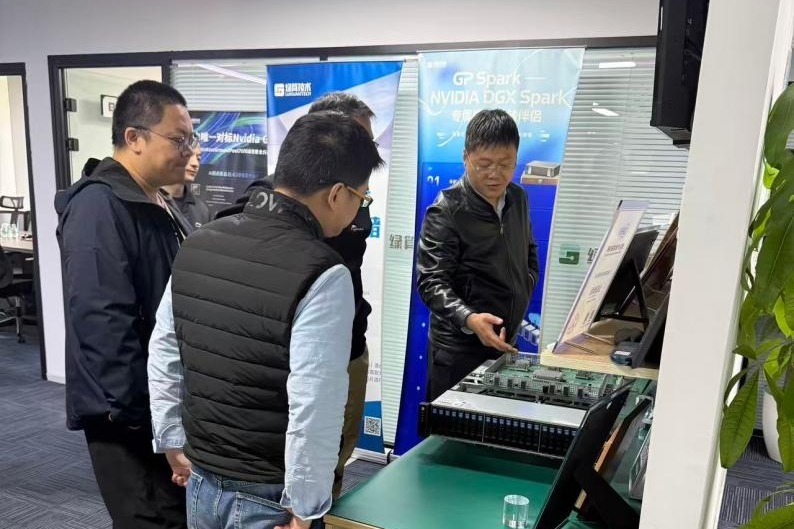
On October 27, a delegation from Beijing Memblaze Technology Co., Ltd. (hereinafter referred to as "Memblaze"), a leading enterprise-grade solid-state drive company, visited LUISUAN Technology for a special technical exchange session on AI storage architecture and NVMe SSD technology. Attendees from Memblaze included Yuan Rong, Deputy General Manager, Zhang Zhiqing, Deputy General Manager, and Zhu Lei, Senior Product Director. From LUISUAN Technology, Kong Weihai, General Manager of the Product and R&D Center, Wang Dahui, Embedded Software Manager, and Liu Jintu, Ecosystem Development Manager, joined the exchange. The session was chaired by Kong Weihai.
One side is a leading force in China's enterprise-grade high-performance PCIe SSD market; the other is a solution provider deeply engaged in AI inference storage. This dialogue covered everything from product portfolios to down-to-earth practices in AI inference storage — truly rewarding.
A Shared Vision for AI Inference Storage: Bypassing File Systems, Going Straight to Bare Disks
The two sides held in-depth discussions on AI inference storage architecture and reached consensus on several key points:
The synergy path of JBOF and EBOF Both parties agreed that bypassing the file system and accessing bare disks directly is an effective way to reduce latency in AI inference scenarios; at the same time, direct GPU-to-storage access places higher demands on the low-latency capabilities of SSDs. Memblaze's PBlaze series SSDs deliver excellent bare-disk performance and low latency, while LUISUAN Technology has completed thorough adaptation and validation on both the NVIDIA ecosystem and domestic DPU platforms.
Bare-disk KV Cache writes Drawing on LUISUAN's hands-on experience with the Mooncake framework, the two sides exchanged views on KV Cache write paths, data eviction mechanisms, and write amplification optimization, and confirmed the direction for joint optimization going forward.
Exploring new technology directions The two sides also held open discussions on frontier topics such as SSD on-board memory usage and KV semantics pushdown, providing input for the joint design of next-generation products.
Deeper Collaboration, Continued Progress
From media to architecture, from firmware algorithms to inference frameworks, the two parties will carry out joint design around high bandwidth, high density, and energy efficiency, delivering better storage support for AI inference clusters.