
HPC & Research
HPC supercomputing storage performance improvement
NVMe-oF all-flash storage, ultimate HPC performance
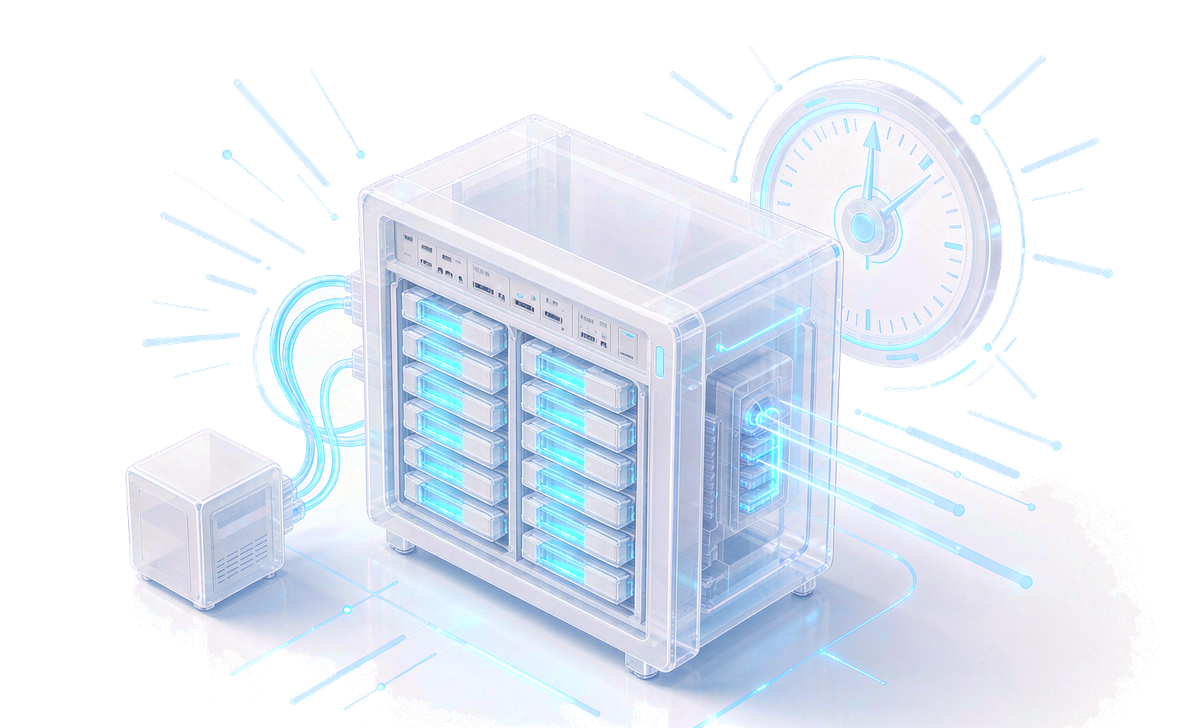
Project background
High-performance computing platforms have increasingly higher requirements for storage performance, and traditional storage has become a performance bottleneck. ForinnBase GroundPool all-flash storage is based on NVMe, NVMe-oF, and RDMA technologies. It uses dedicated memory chips to achieve high-speed large-scale data disk placement and protocol encapsulation analysis, providing high-throughput, low-latency, and high-IOPS ultimate performance support for high-performance computing platforms.
Challenges of traditional storage
- The SATA/SAS protocol is developed for HDD mechanical hard disks. The protocol is thick and the transmission rate, throughput and transmission delay cannot meet the needs of HPC.
- Traditional storage devices need to increase the number of devices to meet performance and capacity requirements, resulting in prominent energy consumption issues.
- In the context of the national “double carbon” strategy, the problem of high energy consumption needs to be solved urgently
- Performance bottlenecks limit the complexity and scale of HPC applications
- I/O performance cannot meet parallel computing needs, and excessive latency affects computing efficiency.
GP all-flash storage solution
Based on NVMe, NVMe-oF, and RDMA technologies, and combined with dedicated memory chips to achieve high-speed data transfer, we build a high-performance, low-power storage base for the HPC platform.
I/O performance greatly improved
Using NVMe interface SSD, it provides higher IOPS and bandwidth than traditional hard drives, significantly improving I/O performance.
Latency significantly reduced
Using NVMe-oF and RDMA technology, the NVMe protocol is directly transmitted at the network layer, reducing protocol conversion and data copying, and reducing latency.
Enhanced parallel computing capabilities
NVMe supports multi-queue and multi-core processing, and RDMA implements OS kernel bypass, freeing up more CPU resources for computing.
Achieve energy conservation and emission reduction
The power consumption of a single GP is less than 300 watts, which saves 70% of energy compared with traditional storage devices (more than 1000 watts). It can save about 260,000 yuan in electricity bills for large data centers every year.
Core advantages
- A single machine provides 6 100Gb Ethernet interfaces and 24 NVMe U.2 disk slots
- Provides ultra-high performance of 16.2 million IOPS, 72GB/s throughput, and 20μs latency
- The power consumption of the whole machine is less than 300 watts, which is more than 70% lower than traditional storage energy consumption.
- Supports horizontal expansion of storage nodes, and the performance of expanded nodes increases linearly
- The entire file system can be expanded to the exabyte level
Performance indicators
| index | Single unit capability |
|---|---|
| Single unit throughput | 43 GB/s |
| Single IOPS | 4.15 million |
| Single unit capacity | 30.72TB × 24 |
| file system extension | Exabyte level |
Related products
otherCase

Intelligent Computing Center·AI Inference Acceleration
KV Cache offloading · GPU utilization increased to 94%
View Case
Scientific research institutions · High performance computing
High-throughput base for supercomputing and scientific research big data
View Case
Carrier light computing storage (elastic block storage)
Elastic block storage service benchmarking AWS EBS
View Case
Futures trading backtesting system
Backtest reporting cycle shortened from 30 days to 2.5 hours
View CaseWant to know how we implement your scenario?
Contact us and the LUISUAN technical team will provide targeted solution suggestions based on your business.
Inquire Now